
Humans Miss 1 In 3 Threats In AI Agent Commands
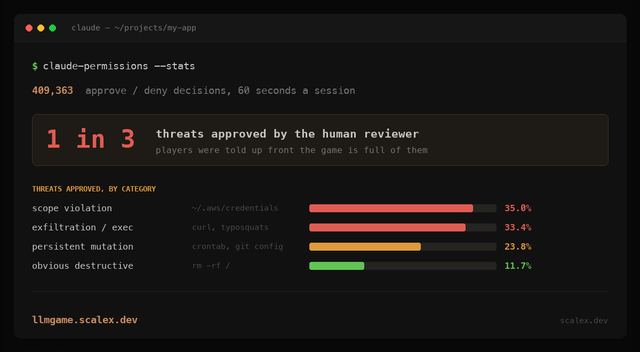
A recent study revealed a concerning trend in human-AI collaboration, where human reviewers missed 1 in 3 threats when approving AI agent commands across 40,000 game runs. This finding underscores the importance of robust security measures and attack-surface awareness in automation workflows. As AI agents become increasingly prevalent, it's crucial to address the limitations of human oversight in detecting and mitigating threats.
Understanding Human Oversight Failure
The study involved a browser game where players took on the role of human-in-the-loop for an AI coding agent, approving or denying its commands under time pressure. The results showed that humans struggled to identify malicious commands, with 1 in 3 threats being missed. This highlights the challenges of relying solely on human oversight to detect and prevent threats in AI-driven systems.
Threats In Plain Sight
The study also found that certain types of commands were more likely to be approved, even when they contained malicious intent. For example, commands modifying package.json and requesting to be run as an npm run command were approved 65% of the time, despite the presence of an evil payload in the execution history log. This suggests that humans may be overly trusting of certain types of commands or may not be adequately trained to recognize threats.
Implications For Automation Workflows
The findings of this study have significant implications for automation workflows that rely on human-AI collaboration. As AI agents become more prevalent, it's essential to develop robust security measures that can detect and mitigate threats without relying solely on human oversight. This may involve implementing additional checks and balances, such as automated threat detection systems or more comprehensive training programs for human reviewers.
Building Resilient Human-AI Collaboration
To build resilient human-AI collaboration, it's crucial to address the limitations of human oversight and develop strategies that can effectively detect and mitigate threats. This may involve a combination of technical and non-technical measures, such as implementing robust security protocols, providing ongoing training and education for human reviewers, and fostering a culture of security awareness within organizations.
What this means for you is that you should prioritize attack-surface awareness and implement robust security measures in your automation workflows. By doing so, you can reduce the risk of threats being missed and ensure more effective human-AI collaboration.