
LiteLLM Hack Impacts Thousands
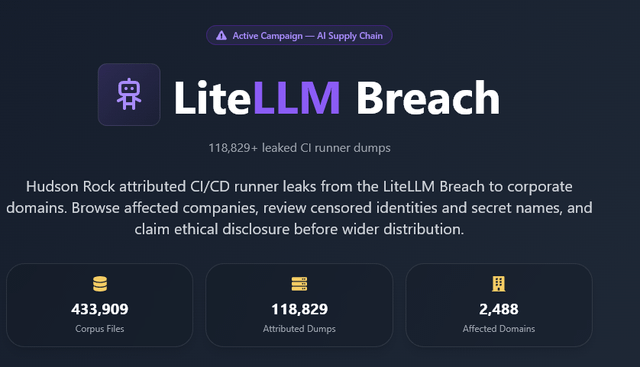
The cybersecurity landscape is facing one of the most sophisticated multi-ecosystem supply chain campaigns to date, with the LiteLLM hack impacting thousands of global enterprises. The breach, orchestrated by a threat actor group known as TeamPCP, has resulted in the silent exfiltration of deep developmental secrets from affected companies. This massive breach has significant implications for the cybersecurity industry, emphasizing the need for robust attack-surface awareness and privacy hygiene practices.
Understanding the Breach
The LiteLLM hack involved the compromise of a widely adopted open-source AI proxy gateway, allowing threat actors to harvest live environment memory and configurations mid-execution. The breach resulted in the leak of 153GB of sensitive data, containing 433,909 files, with 118,829 CI runner dumps attributed to 2,488 affected corporate domains.
Supply Chain Vulnerabilities
Supply chain breaches, like the LiteLLM hack, highlight the importance of scrutinizing the security of third-party components and dependencies. As the use of AI and open-source technologies continues to grow, it is essential to prioritize the security and integrity of these components to prevent similar breaches.
Attack-Surface Awareness and Privacy Hygiene
GetKhojo's emphasis on attack-surface awareness and privacy hygiene is crucial in preventing and mitigating the impact of supply chain breaches. By regularly scanning for vulnerabilities and maintaining robust security practices, organizations can reduce their risk of being compromised. This includes implementing measures such as continuous integration and delivery (CI/CD) pipeline security, secure coding practices, and regular security audits.
Practical Takeaways
- Regularly scan for vulnerabilities and maintain up-to-date security patches
- Implement robust CI/CD pipeline security and secure coding practices
- Prioritize attack-surface awareness and privacy hygiene practices
What this means for you: In the face of increasingly sophisticated supply chain breaches, it is essential to prioritize attack-surface awareness and privacy hygiene practices. By taking proactive measures to secure your organization's attack surface and maintain robust security practices, you can reduce the risk of being compromised and protect your sensitive data.