
TheHatman Exposes Azure Data
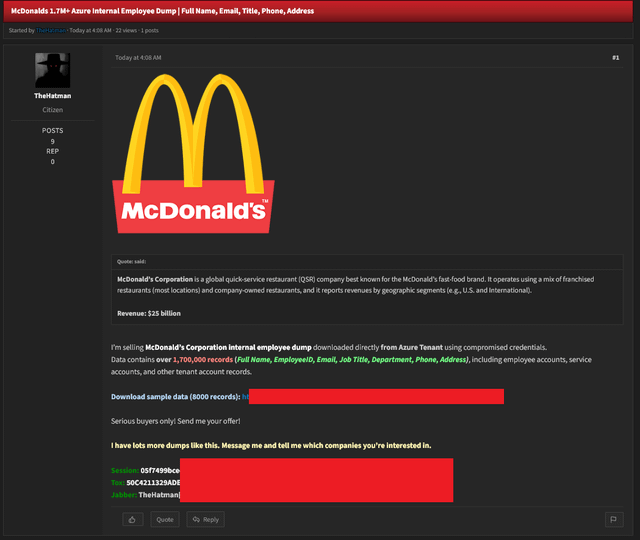
A recent surge in data leaks on the dark web has seen TheHatman, a threat actor, flooding cybercrime forums with massive internal employee directories belonging to several Fortune 500 companies. The actor claims these dumps were extracted directly from the organizations’ Azure Tenants, including those of McDonald’s and Vodafone. This campaign highlights the vulnerabilities in cloud security and the importance of robust protection measures.
Understanding the Azure Exfiltration Campaign
The campaign involves the systematic sale of internal employee directories stolen from some of the world's largest corporations. The data includes corporate email addresses and field names that match standard Azure directory exports, suggesting a high level of legitimacy. This has significant implications for the affected companies, as well as for the broader cybersecurity landscape.
Implications for Enterprise Security
The fact that a single threat actor can extract and sell sensitive data from multiple Fortune 500 companies underscores the need for enhanced security measures. Companies must prioritize the protection of their cloud infrastructure, including Azure tenants, to prevent such breaches. This includes implementing robust access controls, monitoring for suspicious activity, and ensuring that all employees are aware of the risks and consequences of data exfiltration.
The Role of Compromised Credentials
TheHatman claims to have used compromised credentials to extract the data from Azure tenants. This highlights the importance of strong password policies, multi-factor authentication, and regular security audits to identify and address vulnerabilities. Companies must also ensure that their employees are educated on the risks of phishing and other social engineering tactics used to obtain credentials.
Attack Surface Awareness and Scanning
Regular scanning and monitoring of the attack surface can help identify vulnerabilities before they are exploited. This includes scanning for open ports, outdated software, and other weaknesses that can be used as entry points by threat actors. By prioritizing attack surface awareness and scanning, companies can reduce the risk of data exfiltration and other cyber threats.
What this means for you is that it's essential to review your organization's cloud security posture, including Azure tenants, and ensure that robust protection measures are in place. This includes implementing strong access controls, monitoring for suspicious activity, and prioritizing employee education and awareness. By taking these steps, you can reduce the risk of data exfiltration and protect your organization's sensitive data.